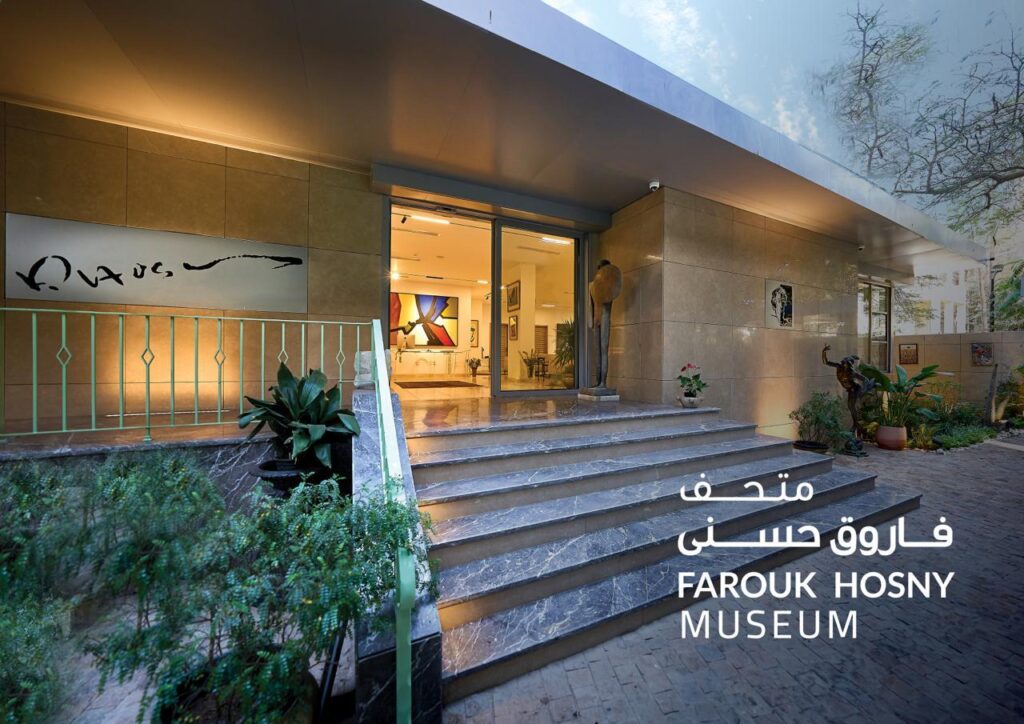
The Farouk Hosny Museum represents a space of memory and beauty. Its opening marks the culmination of an exceptional artistic journey spanning decades, during which Farouk Hosny developed a distinctive visual experience that transcended geographical boundaries and engaged with international artistic movements and schools, achieving a singular visual imprint that has become a reference point and a firmly rooted chromatic identity within the Arab artistic consciousness.
The museum presents a carefully curated selection of the artist’s works, reflecting his aesthetic transformations and diverse creative phases, alongside works that have featured prominently in major international exhibitions and museums. This allows visitors to engage in a comprehensive visual reading of an artistic path characterized by continuous exploration and free experimentation.
The museum is not limited to the artist’s own works; it also houses his personal collection of masterpieces by artists from Egypt and around the world, creating a rich visual dialogue between different artistic experiences and schools, and bringing together prominent names that have left a lasting mark on the history of modern and contemporary art.
The museum includes artwork for Ragheb Ayad, Adam Henein, Mahmoud Saeed, Hamed Nada, Samir Rafea, Giorgio de Chirico, Mahmoud Mokhtar, Seif Wanly, Adham Wanly, Antoni Tàpies, Hedayet, Nicolas Poussin, Alexandre Cabanel, Arnaldo Pomodoro, Jean-Baptiste-Siméon_Chardin and others.
In addition, the museum includes a specialized library that serves as an important intellectual reference, containing key art and literary publications, alongside a music library and a media room dedicated to the presentation of artworks and documentary films, forming a living integration of image, text, and sound.
The Farouk Hosny Museum operates under the umbrella of the Farouk Hosny Foundation for Culture and Arts as a dynamic cultural project that goes beyond the mere display of artworks, seeking to revive aesthetic dialogue and to establish art as a sustainable human value and a fundamental source of cultural awareness.